Top Brand Vertical Cuttings Dryer,Vertical Centrifuge, drilling waste management and treatment equipment,Oil based mud treatment system manufacturer-KOSUN
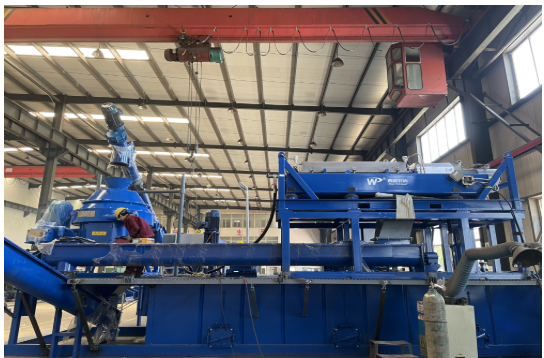
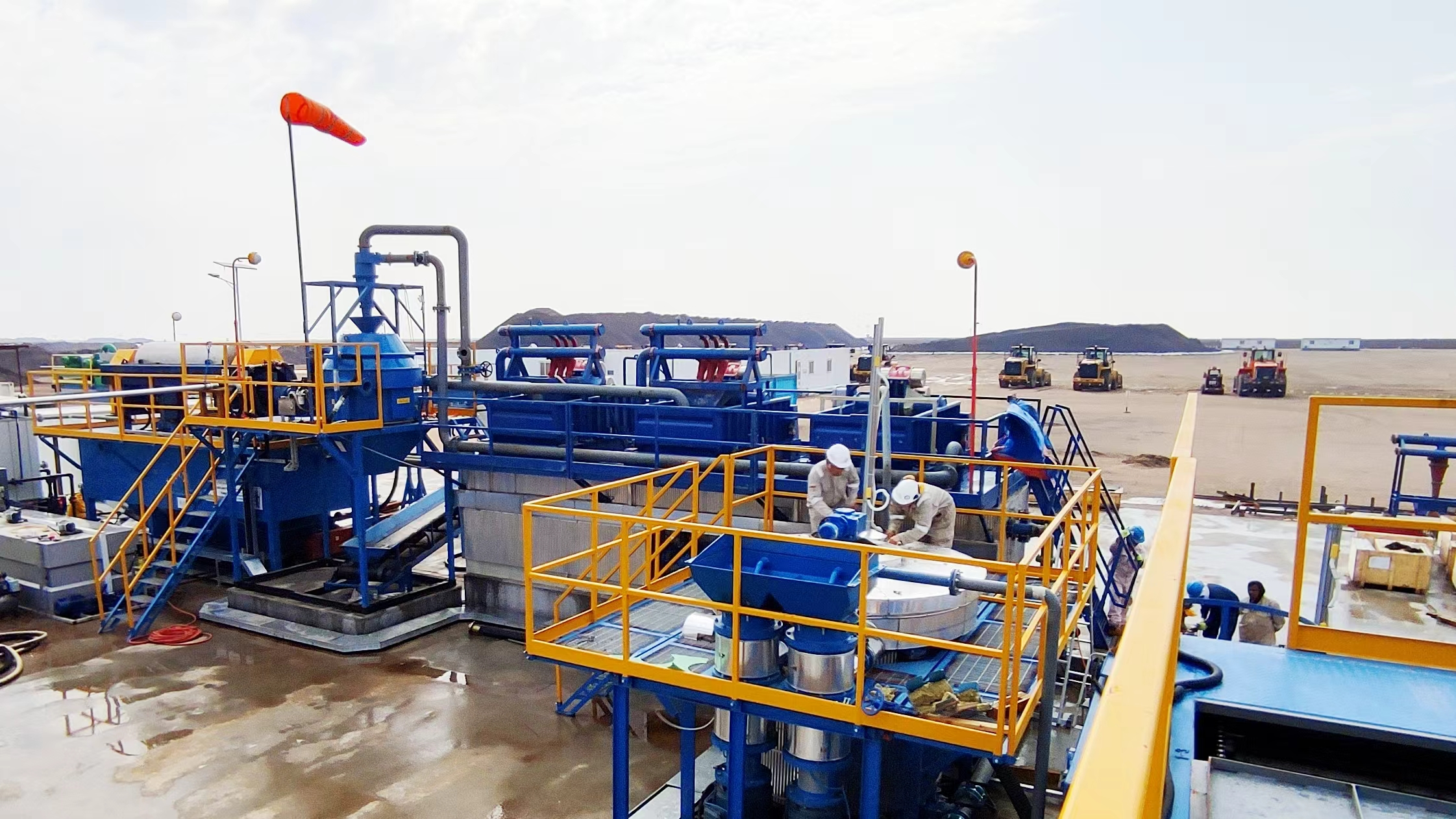
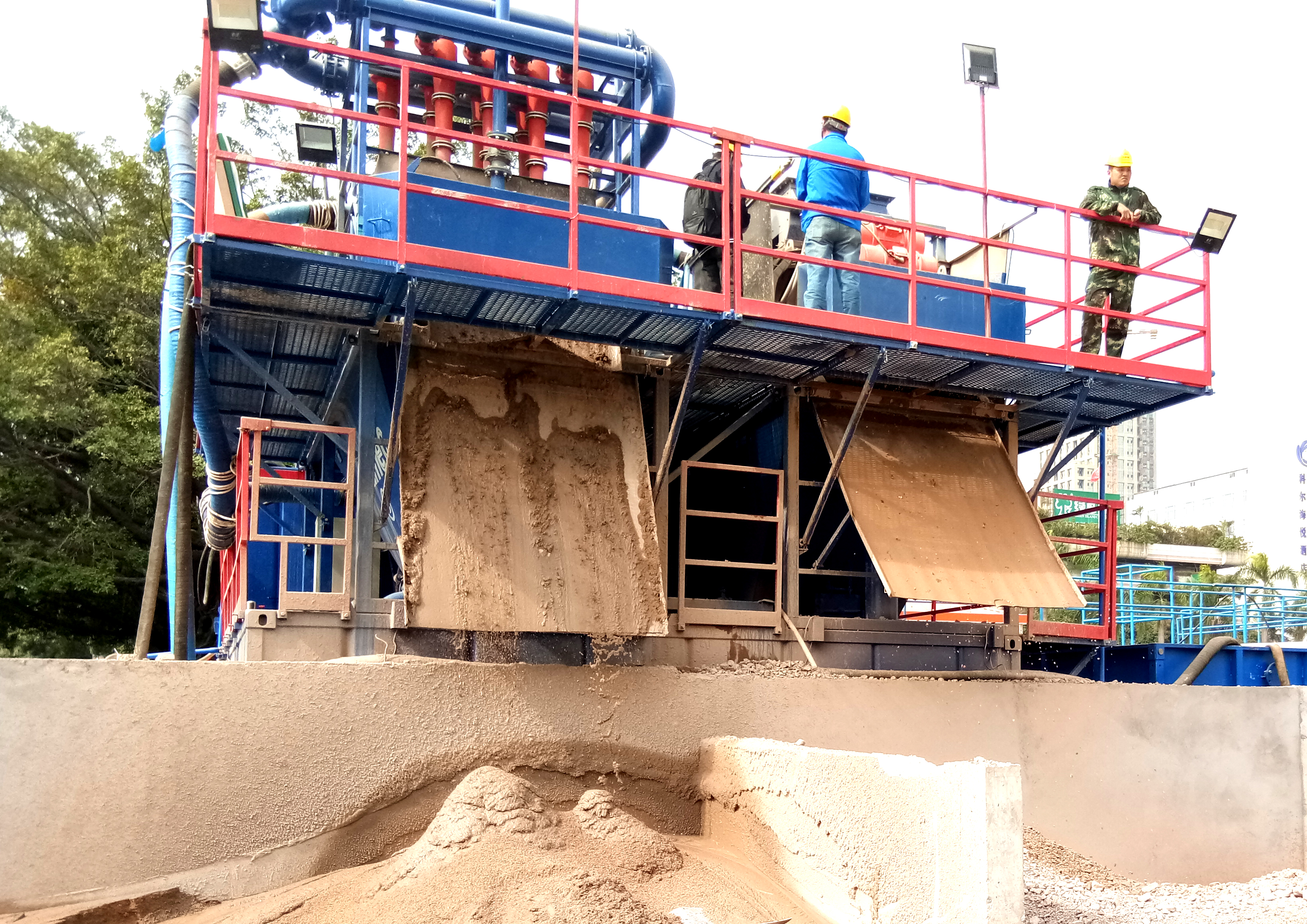
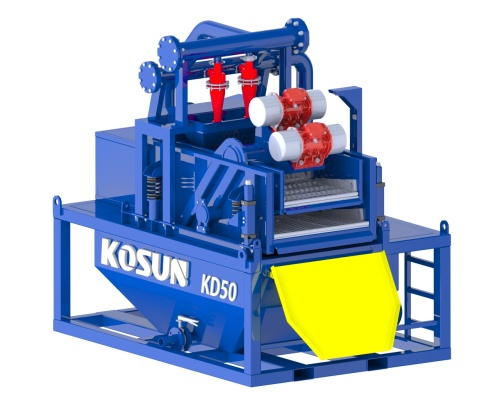
The KD-200 Slurry Treatment System resolves space limits and long teardown cycles for small-to-medium slurry balance shield projects. It delivers high-efficiency, real-time purification within a very tight structural footprint. As municipal pipeline construction extends into dense urban zones, traditional large multi-tank plants become impossible to deploy due to site constraints. Therefore, this KD-200 Slurry Treatment System utilizes a containerized assembly process. It integrates a scalping shaker, hydrocyclone classification manifolds, feed pumps, and storage tanks onto a single steel skid base, providing a low-consumption, highly mobile fluid recovery solution for modern trenchless projects.
Process Workflows and Staged Separation of the KD-200 Slurry Treatment System
Although the system features a highly condensed structure, the internal fluid dynamics chain remains extremely strict. This design allows the KD-200 Slurry Treatment System to maintain a massive instantaneous throughput within a minimized space:
Primary Screening and Interception: Raw high-viscosity slurry returning from the tunnel face first flows across a large-area scalping shaker. This stage rapidly extracts large stones and cohesive muck blocks.
Secondary Desanding and Centrifugal Classification: Next, a heavy-duty centrifugal pump injects the filtered fluid into the desanding module. Equipped with a large-diameter hydrocyclone, this module uses a high-acceleration centrifugal field to separate coarse sand solids quickly.
Tertiary Desilting and Colloidal Removal: To prevent ultra-fine abrasive particles from eroding the shield thrusters and downstream high-pressure pumps, the fluid enters a fine desilter split-manifold assembly. This multi-cone configuration performs deep micro-particle separation to polish the active mud.
Flexible Regulation for Diverse Geological Formations
Urban geological strata exhibit high unpredictability. To satisfy the material balance requirements of different formations, such as high-plasticity clay or heavy gravel layers, the KD-200 Slurry Treatment System provides strong adjustable flexibility. Operators can tune the vibrating screen excitation force, screen deck angle, and mesh size in real time during continuous drilling operations.
By matching different D50 cut points, the setup adapts dynamically to various processing tasks, minimizing non-productive maintenance downtime. Furthermore, the overall power design remains highly conservative. This remote solution integrates seamlessly with local municipal grids or matches onboard generator sets in remote tunneling sectors.
Conclusion
Modern environmental regulations transform fluid processing from simple single-stage screening into a highly flexible control unit. Implementing this containerized, rapid-deployment KD Slurry Treatment System provides international contractors with an essential tool to optimize operational expenditure (OPEX) while securing strict environmental compliance.
Mud management directly affects drilling speed and compliance costs on modern jobsites, making an efficient HDD mud recycling system an absolute necessity. Raw mud returning from underground contains large, hard cuttings, while exhibiting high viscosity, easy segregation, and highly variable properties. Without proper purification equipment, crews must dig temporary mud pits or haul away liquid waste.
These crude methods create three major industry pain points in narrow urban zones: high fluid chemical costs trim project profits, large solids control equipment cannot fit into restricted spaces, and operators face immediate shutdown risks from strict environmental audits. Therefore, introducing a compact, integrated setup has become essential for contractors to reduce operational costs. This equipment uses modular integration to control drilling waste at the source and enable real-time fluid reuse.
High-Efficiency Advantages of the KSMR-200 HDD Mud Recycling System
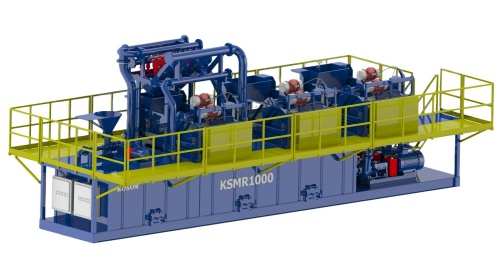
To handle the low displacement and highly restricted spaces of small-to-medium trenchless projects, KOSUN developed a flagship solution: the KSMR-200 HDD mud recycling system. As a top-tier performer in fluid separation, this equipment delivers distinctive structural and technical advantages:
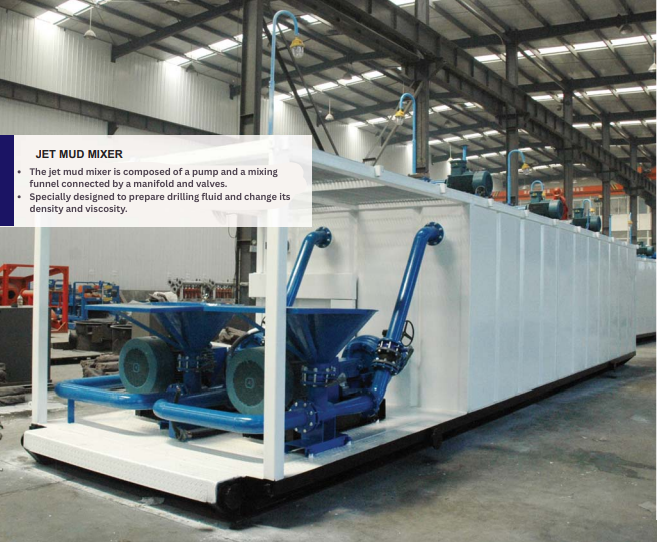
Ultra-Compact Modular Integration: Traditional mud purification plants are massive and complex. However, the KSMR-200 condenses multiple functions into a highly concentrated package. It integrates mud cleaning, fluid mixing, and safe storage onto a single steel skid base. The compact frame minimizes the total jobsite footprint to under 15 square meters. This lightweight design allows flatbed trucks to transport the whole unit easily, shortening assembly and teardown times.
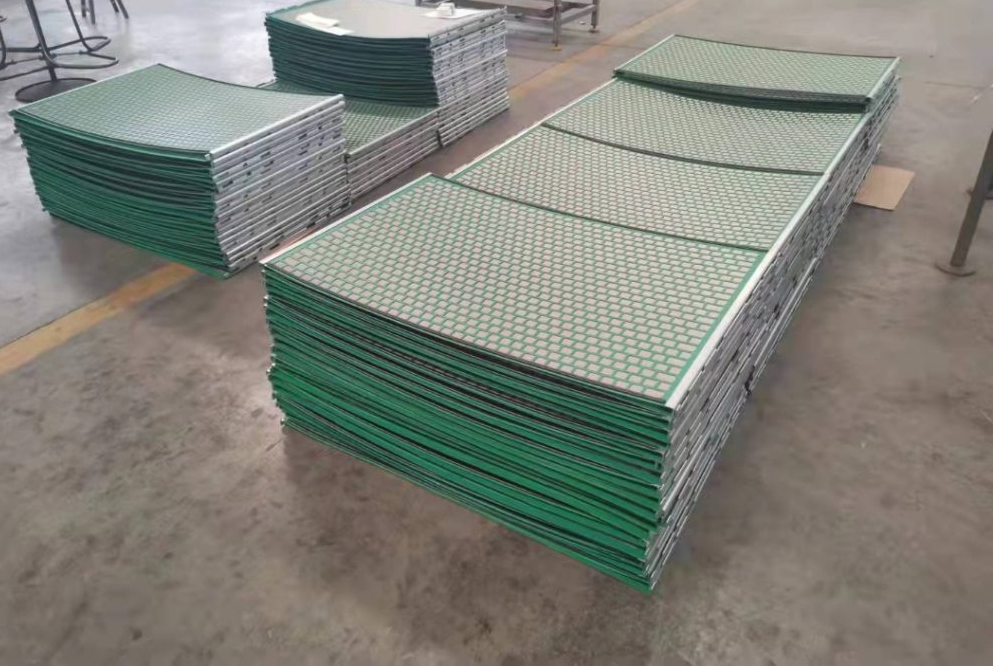
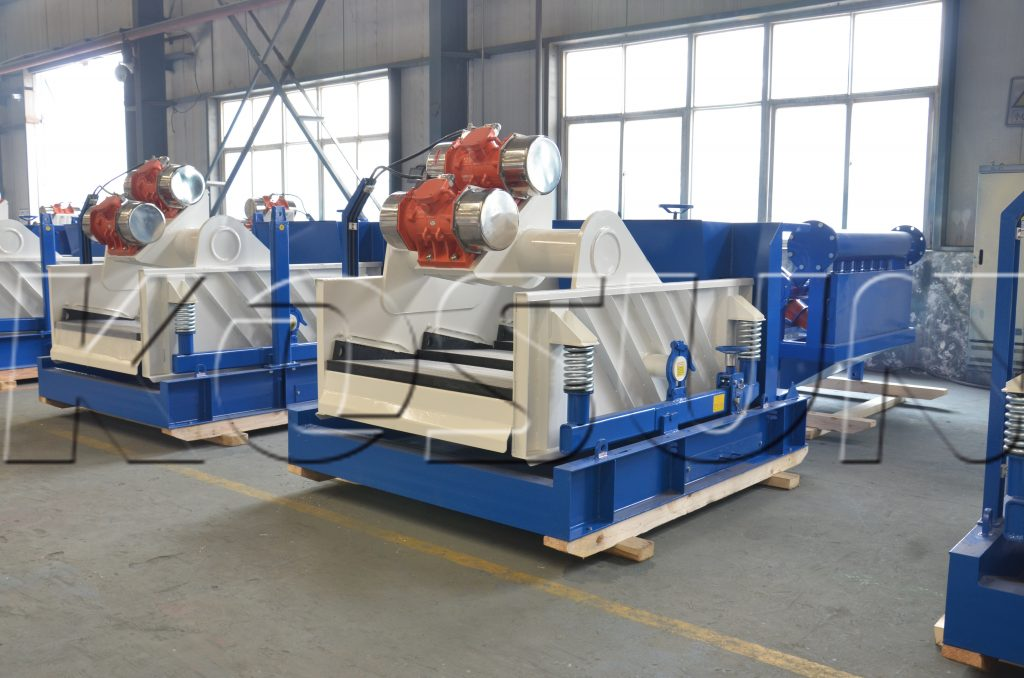
Dual-Deck Linear Shale Shaker Line of Defense: The core technology relies on the proprietary LS2·752 dual-deck linear shale shaker. Within a very small installation space, the dual-screen configuration gives the slurry higher linear acceleration and multi-stage classification capabilities. Combined with adjustable high G-force trajectories, it completely prevents fluid loss and severe mesh blinding when processing high-viscosity fluids.
Micron-Grade High-Precision Purification: Though compact, the system delivers strong fluid dynamics performance. By optimizing hydraulic distribution across the desander and desilter hydrocyclone manifolds, this small HDD mud recycling system maintains a stable processing capacity of up to 50 m³/h. More importantly, it achieves a precise cut point down to 20 microns, extracting harmful fine colloidal solids to prevent excessive wear on downstream high-pressure mud pump fluid ends.
Closed-Loop Ecology and Value Transformation of the HDD Mud Recycling System
Deploying the KSMR-200 HDD mud recycling system shifts trenchless operations from traditional waste disposal to source-controlled closed-loop processing:
100% Fluid Recycling with Zero Fresh Water Consumption: The system utilizes a self-balancing closed circuit. The clarified mud flows directly to the mixing system to combine with new chemical additives. The mud pump then routes the fluid back to the drilling rig for continuous reuse, eliminating fresh water consumption during operations.
Extended Equipment Lifespan and Safety Compliance: All electrical components fully meet international explosion-proof, dust-proof, and rain-proof standards. Critical flow components feature tungsten carbide wear-resistant layers. This heavy-duty engineering ensures stable operations under extreme weather or high sand loads, reducing unplanned jobsite downtime to a minimum.
Conclusion
Instead of focusing on initial purchase costs, industrial fluid processing customers now evaluate total lifecycle costs. A premium HDD mud recycling system that operates efficiently within tight urban footprints provides an essential tool. Ultimately, it helps global drilling companies maximize tunneling efficiency while ensuring strict environmental compliance.
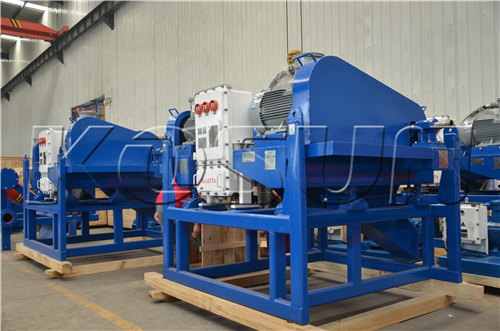
The decanter centrifuge acts as critical equipment for closed-loop fluid circulation systems. Facing complex and variable site conditions, modern industrial customers are shifting their equipment selection preferences significantly.
Market Demand Shifts Toward VFD and Long Bowl Centrifuges
Uncertainty in formation structures and fluid properties remains a core pain point for field operations. Fixed-speed equipment fails to balance fine separation with multi-functional operations. The modern market clearly favors variable frequency drive (VFD) centrifuges that feature high-speed shearing and flexible adjustment capabilities.
During different process stages, customers require equipment that adjusts operational parameters flexibly:
Barite Recovery Conditions:The system adjusts the decanter centrifuge to low-speed operations [1386]. Relying on a precise low-to-medium separation factor, it efficiently captures and recovers high-density weighting materials, directly cutting new mud preparation costs [1386].
Fine Cuttings Removal Conditions:The system operates the centrifuge at high-efficiency separation states. With speeds up to 3900 RPM and G-force up to 3000G, it powerfully removes fine harmful solids above 2 microns, maintaining stable fluid rheological properties.
Furthermore, market demand for long bowl designs continues to increase. Longer bowls extend fluid retention time inside the decanter centrifuge. This process produces drier discharged solids and finer separation cut points, significantly reducing total hazardous waste transportation costs.
Wear Resistance and High Availability of the Centrifuge Under Extreme Loads
Component wear and frequent maintenance shutdowns remain another major pain point for field operators. To ensure continuous operation and extend equipment life, high-quality centrifuge models undergo deep optimization in materials engineering and core supply chains:
Hard Carbide Protection for Flow Components:Installing quickly replaceable carbide sleeves at the bowl discharge port protects against erosion. Welding tungsten carbide wear-resistant layers on the screw conveyor flight faces effectively resists micro-cutting wear from high-velocity solid particles.
High-Standard Component Supply:Selecting premium bearings from German FAG or Swedish SKF prevents failures. Electrical components fully comply with Siemens or Schneider explosion-proof standards, preventing unplanned shutdowns during long-term, high-speed operations.
Conclusion for Decanter Centrifuge
Instead of focus on initial purchase costs, industrial fluid processing customers now evaluate total lifecycle costs. They increasingly choose decanter centrifuge systems that combine high performance, intelligent adjustments, and hardcore wear-resistant craftsmanship. This approach provides an essential tool for companies to achieve cost reduction and efficiency gains while ensuring strict environmental compliance.
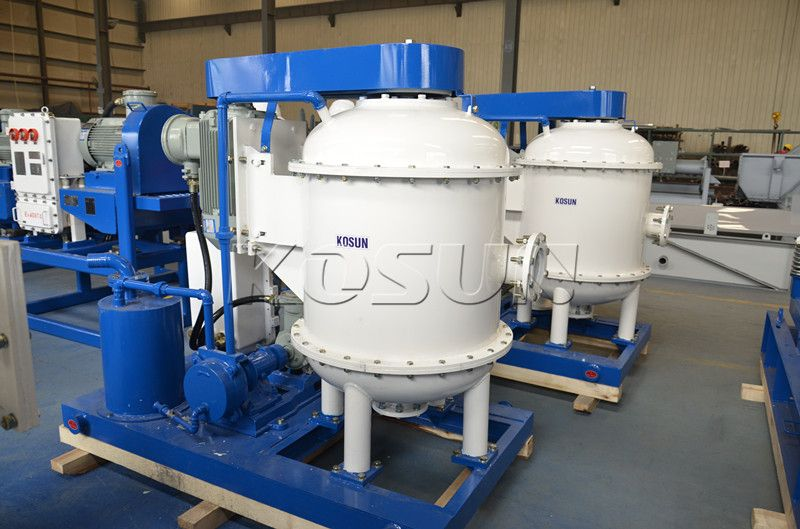
Vertical desanders and desilters are core equipment in oil drilling, river dredging, and wastewater treatment for achieving solid-liquid separation and ensuring liquid purity. Although both utilize centrifugal force for operation, there are significant differences in treatment precision, structural design, and application focus.
Differences in Treatment Precision and Particle Diameter
The most fundamental difference between the vertical desander and desilting equipment lies in their “fineness.” In the solids control process, these two typically occupy different stages of purification.
Desilting Precision: The vertical desander focuses on processing fine particles ranging from 5-74μm, with a desilting efficiency of 85%-95%.
Desanding Precision: In contrast, equipment such as the MD300 vertical desander primarily handles coarser solid particles between 40-100μm.
Application Logic: Usually, the desander performs the initial screening and cleaning, followed by the desilter which completes the subsequent fine purification.
Advantages of Structural Design and Space Utilization
The vertical desander designed by KOSUN has undergone deep structural optimization, fully considering the complex environments of construction sites.
Vertical Structure: The vertical layout greatly saves installation space, making it particularly suitable for working conditions with narrow sites and high equipment density.
Modular Integration: The compact equipment size makes it easy to integrate into skid-mounted systems, meeting the needs for rapid transition and flexible deployment.
Material Customization: Depending on the corrosiveness and abrasiveness of the materials, liners can be customized with polyurethane, high-chromium cast iron, wear-resistant ceramics, or stainless steel.
Working Principle and Energy Consumption Performance
The vertical cyclone desilter relies on the pressure of the fluid itself to drive it, making it a typical energy-saving and high-efficiency solid-liquid separation device.
Centrifugal Separation: The liquid mixture enters the cyclone tangentially, and the centrifugal force generated by high-speed rotation flings the heavy-phase particles toward the wall.
Automatic Discharge: Dense particles slide down the cone to the underflow port for discharge, while the clean liquid flows out from the top overflow port.
Flexible Regulation: Users can precisely control the separation particle size and optimize the treatment effect by adjusting the feed pressure and underflow port size.
Comparison of Extensive Application Fields
Depending on the different properties of the materials processed, the vertical cyclone desilter demonstrates strong multi-scenario adaptability and serves various industries.
Energy Extraction: Used for the purification of oil and gas drilling fluids, thoroughly removing fine drill cuttings to protect drilling pumps and downhole tools.
Environmental Engineering: Achieves turbidity reduction and solid-liquid separation in river dredging and industrial wastewater treatment to meet government emission standards.
Industrial Manufacturing: Suitable for ore pulp classification, tailings thickening in mining, and fine filtration of chemical raw materials such as chemical slurries.
Summary
The choice between a vertical desanders and a desilter primarily depends on your requirements for material particle diameter treatment precision. If you are facing high mud content, limited space, and the need to capture micron-level suspended solids, the vertical cyclone desilter is undoubtedly the more professional and economical choice.
Selecting a vertical cuttings dryer requires a comprehensive evaluation of processing capacity, mud type, environmental requirements, and site conditions. KOSUN offers proven models such as the VC700 vertical cuttings dryer and VC900 vertical cuttings dryer, covering most drilling scenarios to help users achieve precise matching and stable compliance.
Selection Based on Processing Capacity
For small-to-medium drilling platforms and conventional onshore operations, the VC700 is the preferred choice. It features a capacity of 15–40 t/h and a 22kW motor, offering reasonable energy consumption and a compact footprint.For large-scale drilling, high-density mud, and high-flow conditions, the VC900 is recommended. With a capacity of 25–50 t/h, it provides higher separation efficiency and is ideal for continuous, high-intensity operations. Matching the model to the actual discharge volume prevents capacity waste while ensuring stable processing.
Selection Based on Mud Type and Environmental Standards
Oil-based (OBM) and synthetic-based muds (SBM) are high-value and subject to strict discharge regulations. Leveraging high centrifugal G-force, the VC700 can stably control the oil on cuttings (OOC) to below 5%, meeting international environmental discharge requirements. This allows for the efficient recovery of expensive mud and reduces material costs.Water-based muds (WBM) focus on waste reduction and low-cost operation. The VC700 is equally applicable here, reducing total waste volume and disposal fees for both onshore and offshore drilling environments.
Selection Based on Maintenance and Site Conditions
The VC700 features a top-access quick-change design, allowing wear parts and belts to be replaced without moving the main unit. The internal rotor scrapers are coated with tungsten carbide for wear and corrosion resistance, extending service life and lowering O&M (Operation and Maintenance) costs.For projects with limited space or frequent relocation, the VC700vertical cuttings dryer is preferred due to its modular structure for easy installation and transport. For large-scale, long-term continuous operations, the VC900vertical cuttings dryercan be selected to enhance overall returns.
The VC700 Vertical Cuttings Dryer, designed and manufactured by Xi’an KOSUN Machinery Co., Ltd., is a high-speed vertical centrifugal separation unit. Its core function is to efficiently separate and recover liquid phase drilling fluids from wet cuttings generated during drilling operations. It aims to lower total drilling fluid costs, reduce solid waste discharge, and ensure compliance with environmental regulations regarding the fluid content of discharged cuttings.
Role and Function in Drilling Waste Management Systems
In modern solids control and waste management workflows, the VC700 acts as a critical secondary treatment unit. It is dedicated to achieving “Zero Discharge” (Zero-Discharge Site) requirements, directly impacting the costs of Oil-Based Mud (OBM) and waste disposal.
Efficient Liquid Recovery: Utilizing high centrifugal G-force, it effectively separates adhering liquid phases from solid cuttings for superior solid-liquid separation.
Preventing Mud Loss: The unit effectively recovers valuable mud lost due to shaker “mud-over,” rig movements, or screen blinding.
Environmental Compliance: Significantly reduces solid discharge; treated solids can consistently achieve an Oil on Cuttings (OOC) below 3%, meeting stringent environmental discharge standards.
Technical Features and Performance Advantages
The KOSUN VC700 vertical dryer integrates several technical advantages designed for reliable, high-efficiency, and maintenance-friendly field operations in harsh environments:
High-Efficiency Separation: Specifically designed for OBM cuttings recovery. The stable OOC of <3% drastically minimizes the volume of solid waste.
Wear-Resistant Materials: The flights on the internal rotor are coated with tungsten carbide anti-corrosion and wear-resistant material, significantly extending the service life of key components and reducing long-term maintenance costs.
Optimized Maintenance Design: Common wear parts can be replaced directly from the top of the unit without moving the entire machine. Belts can also be changed without relocating any assemblies, greatly reducing downtime.
Wide Applicability: Ideal for OBM cuttings recovery, ensuring valuable mud is returned to the system while fulfilling “zero discharge” mandates.
Economic and Environmental Value
The application of the VC700 vertical dryer is directly linked to the sustainability and profitability of drilling operations:
Cost Savings: By directly recovering expensive OBM and returning it to the active system, it substantially reduces the need for new mud purchases and lowers waste disposal fees.
Environmental Benefits: Facilitates “Zero Discharge” operations, minimizing environmental footprints and helping operators comply with increasingly strict environmental regulations.
The KOSUN VC700 vertical dryer is a technically mature, reliable, and user-friendly solid-liquid separation device. With its high recovery capacity, optimized structural design, and exceptional durability, it provides a safe, compliant, and economical waste management solution for modern drilling, making it an ideal choice for Green Drilling and cost-efficiency.
In modern petroleum drilling engineering, as environmental regulations become increasingly stringent, the effective treatment of oily drill cuttings has become a focal point of the industry. As the core equipment of the Drilling Waste Management System, the vertical cuttings dryer has become the key to achieving mud recovery and waste reduction through its superior solid-liquid separation performance.
I. Definition and Application Scenarios of Vertical Cuttings Dryer
A Vertical Cuttings Dryer (also commonly referred to as a vertical dryer or drill cutting dryer) is primarily used to treat cuttings generated during drilling processes using Oil-Based Mud (OBM) or Synthetic-Based Mud (SBM). Its core objective is to strip and recover the liquid adhering to the surface of the cuttings using the immense centrifugal force generated by high-speed rotation. This process achieves solid-liquid separation, resulting in drier solids and a significantly reduced oil content on the waste.
II. Detailed Working Principle of Vertical Cuttings Dryer
Feeding and Acceleration Phase
Oily drill cuttings are fed into the top inlet of the dryer via conveying equipment (such as a Screw Conveyor). Upon entering the equipment, the cuttings drop into the center of the high-speed rotating basket (screen).
High G-Force Centrifugal Separation Phase
The rotor (containing the screen basket) rotates at high speeds, generating a centrifugal force (G-force) typically ranging from 300G to 900G. Under this intense force, the oil-based liquid adhering to the solid surfaces passes through the screen gaps and enters the liquid collection tank, while solid particles larger than the screen gaps are retained on the inner side of the screen.
Mechanical Scraping and Assisted Discharge Phase
To prevent solids from accumulating and clogging the inner walls of the screen, the equipment is designed with internal rotating flights (scrapers). There is a slight speed differential between the scrapers and the screen basket. This controlled differential operation scrapes the dried solids off the screen, allowing them to move toward the discharge outlet at the bottom of the equipment under the influence of gravity.
Liquid Recovery and Purification Phase
The expelled liquid phase (mud containing a small amount of fine particles) is discharged through the liquid outlet. Typically, this recovered liquid is sent to a downstream Decanter Centrifuge for further purification. Once ultra-fine particles are removed, the liquid is finally reintroduced into the active mud system for reuse.
III. Key Technical Parameters Affecting Drying Efficiency
To achieve optimal treatment results under the latest environmental standards, the following parameters are critical:
Screen Gap: Typically selected based on the geological formation and lithology.
Centrifugal Force: Higher rotational speeds yield greater centrifugal force and better dehydration; however, this places higher demands on the equipment’s dynamic balance and wear resistance.
Scraper Wear Resistance: Since drill cuttings are highly abrasive, high-performance Vertical Cuttings Dryer scrapers are usually reinforced with tungsten carbide or other hard alloys to extend their service life.
Through efficient physical separation, the vertical centrifuge dryer not only solves environmental discharge challenges in oilfield operations but also saves drilling contractors significant material costs through high-ratio mud recovery.
In response to increasingly stringent environmental protection standards, a growing number of drilling sites are adopting drilling cuttings vertical centrifuges to achieve solid-liquid separation and minimize waste volume. As high-speed rotating equipment, scientific and reasonable daily maintenance and upkeep are crucial for the long-term stable operation of the vertical centrifuge. Kosun, specializing in the research, development, and manufacturing of solid control and cuttings treatment equipment for many years, has drawn on extensive field experience to compile a set of practical maintenance recommendations. These suggestions aim to help users effectively extend equipment life and enhance processing efficiency.
I. Timely Maintenance of the Lubrication System is Essential
Approximately half a month after the equipment is put into use, the lubricating oil should be changed for the first time. Subsequently, the oil filter screen should be cleaned once a month, and oil quality should be monitored. The frequency of subsequent oil changes should be reasonably determined based on the degree of contamination, but should not exceed a maximum of six months. When replacing with new oil, it is recommended to thoroughly clean the oil pipes, filter screen, and oil tank. If the filter screen is found to be worn, it should be replaced promptly. Simultaneously, check the sealing of all oil pipe interfaces to prevent leakage. The oil level should be checked via the oil sight glass every two weeks and replenished if found to be insufficient.
The main motor and the oil pump motor use independent grease lubrication; grease should be replenished approximately every 2500 hours of operation to ensure smooth running. If abnormal temperature rise, oil pressure fluctuation, or oil deterioration is observed during operation, the equipment should be stopped immediately for troubleshooting to avoid damage to the main shaft or rotor.
II. Daily Operational Checks Cannot Be Overlooked
A routine inspection should be carried out during each shift, focusing on the following aspects:
Whether the equipment vibration is stable, and if there is any abnormal noise;
Whether the main bearing temperature is within the normal range (≤90℃);
Whether connecting bolts show any signs of looseness;
Whether slag discharge and mud outlet are unobstructed, and if the feed/discharge ports are blocked;
Whether the lubrication system has oil leakage or other anomalies.
Upon discovering any abnormality, the equipment should be stopped immediately for handling and hidden dangers eliminated.
III. Regular Maintenance Keeps Equipment As Good As New
Approximately every 1000 hours of operation, the tension of the V-belts should be checked and replaced immediately if severely worn; simultaneously, check if all machine fasteners and sensor connections are secure. The oil filter should be cleaned once a month, and the oil quality re-evaluated; if the oil becomes cloudy or impurities increase, it should be changed earlier than scheduled. Additionally, the mud scraper handle should be operated once every two hours to prevent material buildup from affecting the dewatering effect.
Through scientific maintenance and management, the drilling cuttings vertical centrifuge can not only significantly improve drilling waste fluid treatment efficiency but also effectively reduce subsequent maintenance costs. Kosun consistently adheres to the design philosophy of “reliable equipment and convenient maintenance,” providing customers with efficient, environmentally friendly, and economical overall solutions for cuttings treatment, allowing every centrifuge to achieve its maximum value on site.
In the oil and gas drilling industry, managing drilling waste efficiently is crucial for cost reduction, environmental compliance, and operational safety. One of the key pieces of equipment used for this purpose is the vertical cuttings dryer (VCD). This machine plays a vital role in separating residual drilling fluids from drilled cuttings, minimizing waste volume and recovering valuable drilling mud for reuse.
What Is a Vertical Cuttings Dryer?
A vertical cuttings dryer is a mechanical device designed to remove liquid (primarily oil or water-based drilling fluids) from drill cuttings using centrifugal force. Unlike traditional shale shakers, which rely on vibration, the VCD uses a high-speed rotating basket to force liquids out of the solids, significantly reducing moisture content.
Key Components of a Vertical Cuttings Dryer
Rotating Basket – A perforated drum that spins at high speed, forcing liquids out through centrifugal action.
Conveyor System – Transports dried cuttings out of the unit for disposal or further processing.
Drive Motor – Powers the rotation of the basket.
Liquid Collection System – Recovers separated drilling fluid for reuse.
Control Panel – Allows operators to adjust speed and optimize drying efficiency.
How Does a Vertical Cuttings Dryer Work?
Feeding Phase – Wet drill cuttings are fed into the vertical dryer.
Centrifugal Separation – The high-speed spinning basket forces liquids through small openings while retaining solids.
Solids Discharge – Dried cuttings are discharged via a screw conveyor for disposal or further treatment.
Fluid Recovery – The extracted liquid is collected and returned to the active mud system.
Advantages of Using a Vertical Cuttings Dryer
Higher Mud Recovery – Recovers up to 90-95% of drilling fluid, reducing costs.
Reduced Waste Volume – Lowers disposal costs by minimizing the weight and volume of cuttings.
Improved Safety – Reduces the risk of spills and contamination compared to traditional drying methods.
Versatility – Works with both oil-based mud (OBM) and water-based mud (WBM).
Applications in Drilling Operations
Offshore Drilling – Essential for rigs with limited space and strict environmental regulations.
Land Drilling – Reduces transportation and disposal costs for onshore operations.
Directional & Horizontal Wells – Effective in handling high volumes of cuttings.
Comparison with Other Drying Technologies
Feature
Vertical Cuttings Dryer
Shale Shaker
Centrifuge
Moisture Removal
High (5-10% residual)
Moderate (15-30%)
Very High (<5%)
Mud Recovery
90-95%
70-85%
95-98%
Energy Use
Moderate
Low
High
Footprint
Compact
Large
Medium
Future Trends & Innovations
Automation & IoT Integration – Smart sensors for real-time monitoring of drying efficiency.
Enhanced Material Durability – Longer-lasting components for harsh drilling conditions.
Hybrid Systems – Combining VCDs with thermal desorption for near-zero discharge.
Conclusion
The vertical cuttings dryer is a critical component in modern drilling waste management, offering superior fluid recovery, cost savings, and environmental benefits. As drilling operations become more complex and regulations stricter, the demand for efficient VCD technology will continue to grow.
The Smart Solution for Eco-Friendly & Cost-Effective Drilling Operations
In today’s environmentally regulated drilling industry, efficient waste management is non-negotiable. The KOSUN Vertical Cuttings Dryer delivers unmatched performance in solids control, transforming wet drilling cuttings into dry, disposable material while recovering valuable drilling fluids – saving you time, money, and compliance headaches.
Why Every Modern Drilling Operation Needs This Machine
✅ 95%+ Liquid Recovery – Maximizes fluid reuse and minimizes waste volume ✅ Compact & Robust Design – Fits easily on offshore rigs and remote sites ✅ Energy-Efficient Operation – Advanced motor technology reduces power costs ✅ Compliance Ready – Meets strict EPA and international environmental standards ✅ Low Maintenance – Easy-access components minimize downtime
How It Works: Simple Process, Superior Results
Wet Cuttings Enter – Contaminated drill waste is fed into the system
High-Speed Centrifugation – Powerful G-force separates solids from liquids
Dry Solids Discharge – Cake-like cuttings with <10% moisture content
Clean Fluid Return – Recovered drilling mud goes back to active system
This closed-loop process slashes waste disposal costs by up to 60% while keeping your operation environmentally compliant.
Key Benefits You Can’t Ignore
💰 Cost Savings
Reduces drilling fluid losses by 90%
Cuts waste transportation/disposal expenses
🌱 Environmental Protection
Lowers hydrocarbon content in discharged cuttings
Minimizes your operation’s ecological footprint
⏱ Operational Efficiency
Processes 10-50 tons/hour continuously
Integrates seamlessly with existing solids control systems
Who Needs This Solution?
✔ Offshore Drilling Rigs – Space-efficient design perfect for platforms ✔ Directional Drilling Crews – Handles high-volume cuttings from HDD projects ✔ Environmentally Sensitive Sites – Ensures compliance with strict regulations ✔ Cost-Conscious Operators – Delivers ROI in as little as 3 months
Don’t Let Waste Drag Down Your Profits!
Every day without proper cuttings treatment means: ➤ Wasting $5,000+ in recoverable drilling fluids ➤ Risking $50,000+ in environmental fines ➤ Losing productive hours to inefficient processes
🚀 Upgrade Your Operation Today! 👉 Contact KOSUN Now for a FREE consultation and discover how our Vertical Cuttings Dryer can: